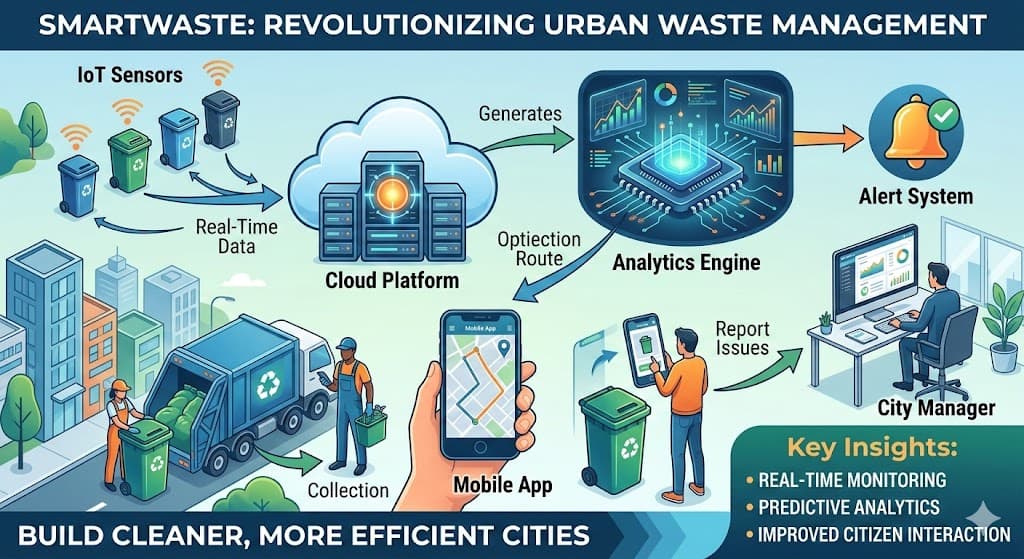
SmartWaste uses IoT sensors and analytics to plan waste collection based on real conditions. The goal is straightforward: fewer overfilled bins, fewer unnecessary trips, and faster response to citizen reports.
Diagram
Overview
City crews usually work from fixed routes and rough pickup windows. That works until traffic shifts, events fill bins early, or reports come in faster than teams can react. SmartWaste addresses that by sending live bin data to a prediction and routing layer, then pushing actions to field teams and managers.
1. Introduction
Overflowing public bins create obvious hygiene and service issues. The harder problem is operational: teams lose time on half-empty pickups while other areas are missed. This system tries to rebalance that workload with real-time visibility.
2. The User's Problem: A User Story
"As a city resident, I want to be notified when my waste bins are full so I can report it, ensuring timely collection and a cleaner neighborhood."
Residents notice missed pickups immediately. Teams, on the other hand, see route-level trends. SmartWaste connects those two views: citizens can report issues in the app, and crews get route updates based on sensor data plus predicted fill times.
Diagram Breakdown
The diagram maps the core parts of the system:
- IoT sensors report bin fill levels.
- Cloud platform stores events and coordinates system traffic.
- Analytics engine predicts fill time and runs route optimization.
- Alert system notifies crews when action is needed.
- Mobile app supports crew routing and citizen issue reporting.
- Web dashboard gives managers a live operations view.
Interactions
- Data collection: sensors send fill-level events to the cloud platform.
- Processing: analytics predicts when bins will reach threshold and computes efficient routes.
- Alerting: crews receive collection alerts in the app.
- Collection update: once waste is collected, status is pushed back to the platform.
- Citizen loop: residents submit reports; managers get notified and can prioritize response.
- Monitoring: dashboard metrics track completion, lag, and route performance.
Key insights
- Live sensor data helps reduce both overflow incidents and unnecessary pickups.
- Prediction quality matters less without operations integration; routing and alerting are what convert predictions into service improvements.
- Citizen reporting works best when it feeds directly into the same workflow crews already use.
Next steps
- Pilot in one district first and measure overflow rate, route length, and response time.
- Set clear alert thresholds per bin type instead of one global rule.
- Add feedback from crews to improve route recommendations over time.